
News
Rajiv Menon Joins Decibel as Managing Director for APJ
Read more


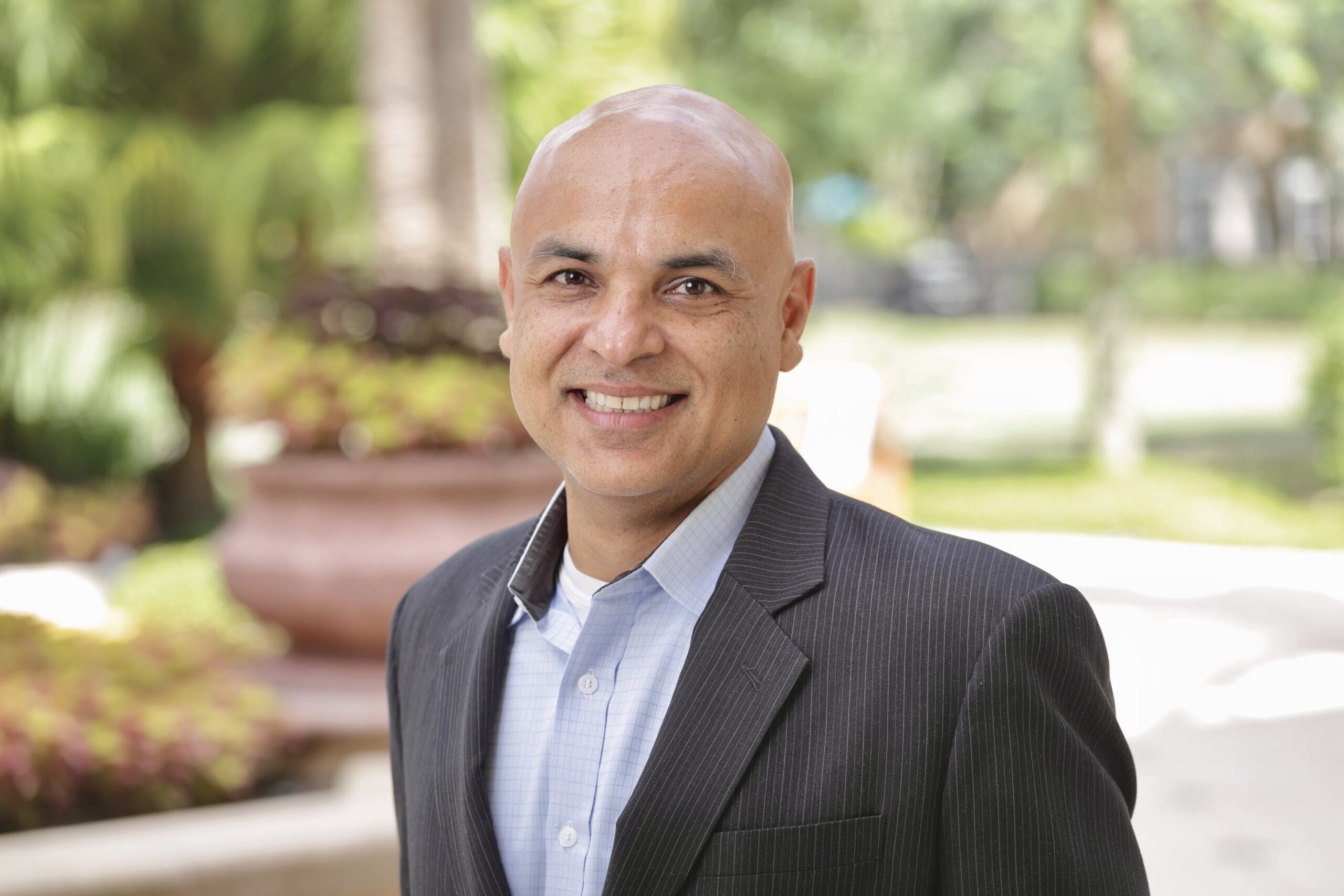
We are excited to announce that Punit Minocha has joined Decibel as a Founder Advisor. Punit has been a senior corporate development leader and advisor to startups for over two decades, and was most recently EVP of Business and Corporate Development at Zscaler where he was responsible for the acquisitions, investments, and technology alliances. Prior to Zscaler, Punit built the business development and corporate development teams at Palo Alto Networks and Trend Micro, where he also ran their data center and cloud computing solutions business. In his role at Decibel, Punit will advise our founders on how early stage companies can successfully navigate strategic partnerships with the major tech companies at the intersection of AI and security. We were excited to share his perspectives in our Founder Q&A:
I trained as an electrical engineer in New Hampshire and Wisconsin, and went to Intel fully expecting to be an engineer for the rest of my life. I found I had a very broad interest in how our technology was strategically positioned and was very fortunate that Eva Chen at Trend Micro gave me a shot at running M&A and corporate development when they were in their early years (this is also when I first met Jon Sakoda at Decibel - we tried to acquire his first company and remained friends through the years). The most misunderstood part of the job is people think it is a very transactional business. The art of the “deal” including the negotiation is maybe five percent of the job. The core of the job is building strong relationships both internally and externally to have the credibility to make a successful partnership work on all sides. The deal itself is really a small part in comparison to the strategic work that must be done before and after.
When I first came to the US, I was an immigrant and needed to very quickly adapt to a culture I didn't understand. I learned quickly to build confidence and resiliency in challenging situations, and I've spent much of my life deliberately putting myself back in that position to retrain my mind. In Fall 2023, Kilimanjaro was a chance for me to push outside my comfort zone - even though it is not a technical climb, the ascent is physically demanding as you reach very high altitudes quickly and there is no time to rest or acclimate. There's a long stretch where everything is uncomfortable and the only option is to keep moving up the mountain. You have to push through even when your mind and body are telling you it is time to turn around. As the years have gone by, I live by one mantra “Get comfortable with being uncomfortable”. I continue to challenge myself with personal and professional goals. Most recently, this summer, I rode up Mont Ventoux, the “Giant of Provence” – a ride that is considered a rite of passage for cyclists and one of the sport’s most iconic climbs. Start-ups are no different - you can never get complacent and are always on to the next problem. I give this advice a lot to founders and it is helpful to have a reference point anchored by my own personal experience.

The most persistent myth is that great companies are "bought, not sold.” I think there is some truth in this - a great company will always attract M&A interest but often this psychology leads founders to underinvest in strategic partnerships. There is a lot of work that great founders put into developing authentic relationships with prospective acquirers and there is little downside to building these networks. The other myth that I try to dispel is that it is often "too early to engage” in M&A discussions. Founders often underestimate how much time goes into developing a high quality relationship with all of the constituents required for a large transaction, and often it takes several quarters if not years for a partnership to be developed including technology integration, strategic roadmap alignment, and direct sales / channel momentum. I personally don’t think it is ever “too early” to properly engage, but it often can be too late.
There have been many strategic moves in cybersecurity over the past several quarters due to the diffusion of AI into the modern tech stack. I think this sets the table for a very exciting 18 months where we will see even more tech M&A. First, the advancement of frontier foundation models like Mythos has put advanced hacking capability within reach of almost anyone, which means every company now needs to take security more seriously. Major platforms like ServiceNow, Databricks, and Accenture are examples of three companies who previously were not security players entering the market in a meaningful way. The other major trend is that AI itself needs to be used with proper security which has led to foundation model labs like OpenAI and Google acquiring into the space. Looking back this will be the golden era for cybersecurity founders as all of these trends lead to a much larger TAM and growth rate than we’ve ever seen.
I spent twenty-five years meeting companies three to eight years after they were founded. Over time I could easily tell which founders had built their companies on the right foundations, and which startups looked great from a distance but did not have strong pillars inside. Companies that had attracted great talent and had learned to lean into their unique differentiation became highly desirable acquisitions, and their investors and boards played an important role in helping them grow in the early years by avoiding the shortcuts that many often take. I have admired Decibel’s approach working closely with founders and early adopters from the earliest stage and am looking forward to supporting their companies. Jon and I first met on opposite sides when he was a founder more than twenty years ago, and it is going to be a lot more fun to be on the same side of the table going forward!